Protected Outdoor Spaces That Work Year-Round
Roofed Decks in Sidney for extending outdoor usability through changing weather and seasons
Level Up Portable Decks builds custom roofed deck systems in Sidney, Montana for homeowners who want a durable, covered outdoor space that performs in all weather conditions. Unlike traditional deck construction, these systems are designed to be fully self-supporting and portable, meaning they are not attached directly to your home. This allows for flexibility in placement while still delivering a solid, long-lasting structure.
Your deck platform and roof system are built as one integrated unit. The support posts are tied directly into the deck’s subframe rather than being set into the ground, creating a stable base without permanent footings. This approach is ideal for homeowners who want a high-quality structure without altering their home’s exterior or foundation.
Most standard roof decks feature a metal roof with a low 1/12 pitch, designed to efficiently shed water and snow while maintaining a clean, modern profile. Because there is no ledger board attached to the house, the entire structure is engineered to stand independently, handling wind and weather loads without relying on the home for support.
The framing uses pressure-treated lumber rated for outdoor exposure, while the roof system is built to withstand Montana’s seasonal extremes, including snow accumulation, high winds, and heavy rain. The result is a covered outdoor space that stays functional year-round, making it ideal for dining, relaxing, or creating a true outdoor living area.
If you are looking for a roofed deck that is built differently and built to last, call Level Up Portable Decks at (406) 261-7498 to talk through sizing, layout, and design options.
How a Roof Changes Your Deck's Function
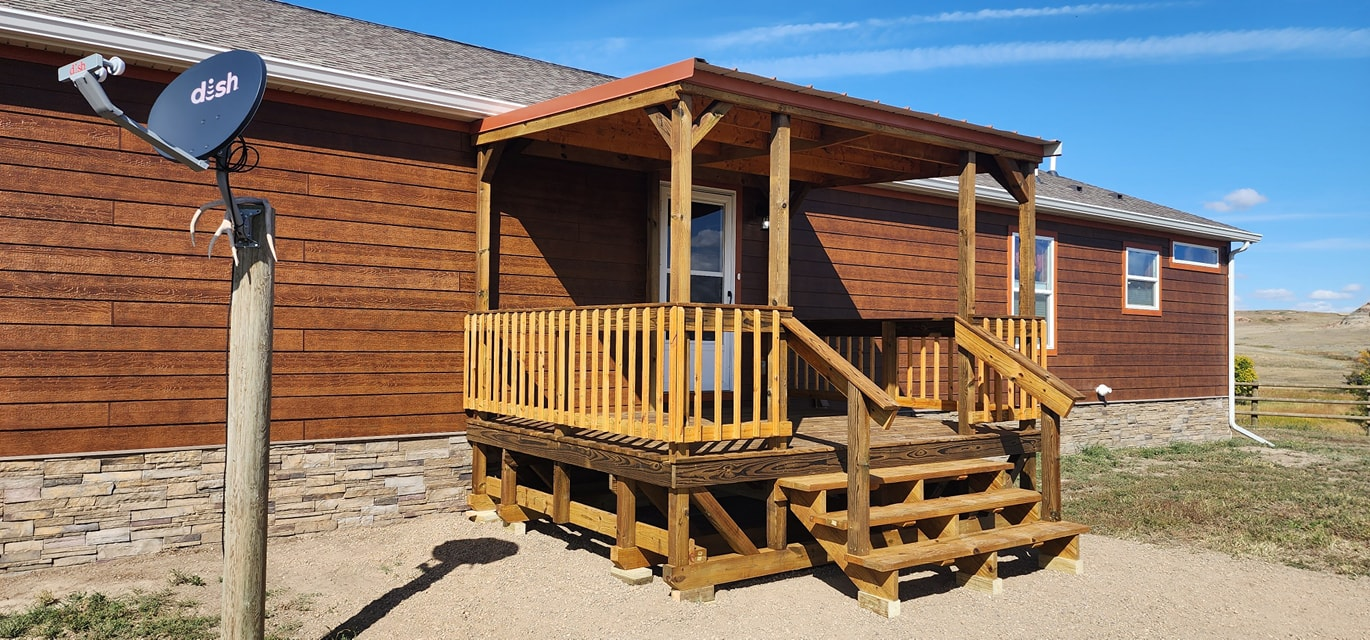
Every roofed deck starts with a reinforced platform designed to carry both the roof system and seasonal snow load. Instead of using ground-set posts, the vertical supports are integrated directly into the deck’s internal framing. This creates a stable, self-contained structure that can stand on its own without being anchored to your home.
The roof is built as part of the overall system rather than added on later. There is no ledger board or attachment point to the house, which eliminates concerns about water intrusion or structural dependency. Most builds include a low-slope metal roof with a 1/12 pitch, allowing precipitation to run off efficiently while keeping the overall profile clean and unobtrusive.
With the roof in place, the space becomes far more practical day to day. Seating areas, grills, and other outdoor items stay protected from rain and prolonged sun exposure. The shaded coverage helps reduce heat buildup, making the area more comfortable during peak summer hours while still allowing it to be used in light snow or wet conditions.
These structures remain open-air by design. Because the sides are not enclosed, weather can still reach the perimeter during strong wind or storms. Homeowners looking for a more enclosed environment can explore additional upgrades such as screens or wall systems to increase protection beyond the standard setup.
Common Questions About Roofed Deck Projects
Homeowners often ask about roof pitch, attachment methods, and how roofed decks perform during heavy snow or wind. These answers cover the key considerations for roofed deck construction in Sidney.
What roof pitch is used for snow and water drainage?
Roof pitch for these systems is typically a low-slope 1-in-12 design. This pitch is sufficient to move water and shed light to moderate snow while keeping the overall structure height low and visually clean. The lower profile also helps maintain stability in wind and keeps material usage more efficient compared to steeper roof designs.
How is the roof supported if it is not attached to the house?
The roof is not attached to the house at all. These systems are built as fully self-supporting structures, so there is no ledger board, flashing, or penetration into the home’s exterior. By eliminating the connection point, you also eliminate the risk of water intrusion behind siding or into wall cavities.
When is additional structural support needed for the roof?
Additional structural support is built into the system when the overall size of the deck or roof span increases beyond standard dimensions, or when higher snow loads need to be accounted for. Because the structure is fully self-supporting, any extra support is designed directly into the subframe and post layout rather than added later. This can include additional internal framing, support posts tied into the deck structure, or adjustments to spacing to ensure the roof system handles weight and weather loads safely.
What happens to snow accumulation on a roofed deck?
Snow is managed by the roof’s low-slope design, which allows it to gradually shed off the metal surface rather than building up excessively. Because these structures are freestanding, snow typically falls to the ground around the deck or along the perimeter of the structure. Planning for where that snow will land is part of the layout, especially near walkways or access points. The roof system is also built to handle expected snow loads, so temporary accumulation is accounted for in the overall design.
How does a roofed deck affect home resale value?
A well-built roofed deck adds functional outdoor living space that appeals to buyers looking for usable areas beyond basic patios, especially in climates with variable weather.
For a covered deck that extends your outdoor season and protects your investment in furniture and equipment, reach out to Level Up Portable Decks at (406) 261-7498 to review roof and deck options.