Shade and Shelter for Outdoor Gathering Areas
Pavilions in Sidney for backyards and event spaces exposed to sun and weather year-round
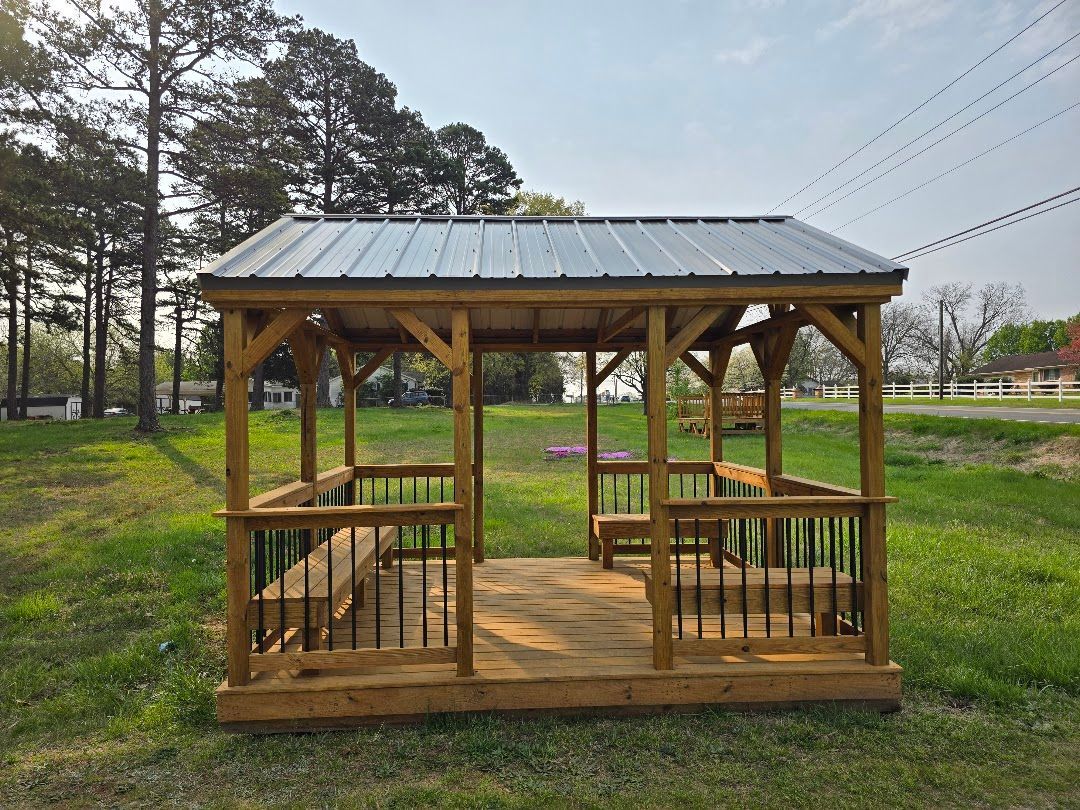
Level Up Portable Decks builds open-air pavilions in Sidney, Montana for homeowners and property owners who need covered outdoor space that handles wind, snow load, and seasonal temperature shifts. You get a framed structure with a solid roof that provides shade in summer and keeps rain and snow off seating, grilling, or dining areas. These structures work well for backyards, parks, and entertainment spaces where you want usable outdoor area that isn't limited to fair-weather days.
The frame is constructed from dimensional lumber or engineered posts with proper bracing to resist lateral loads from wind. Roof pitch and overhang are designed to shed snow and rain without pooling or sagging. Because Sidney experiences both winter snow accumulation and summer thunderstorms, the framing and roof assembly are built to handle live loads and moisture without structural failure or premature rot.
If you need covered outdoor space that protects guests and equipment from weather, contact Level Up Portable Decks at (406) 261-7498 to discuss sizing and site requirements.
How a Pavilion Extends Outdoor Usability
You begin with a site evaluation to determine ground conditions, drainage, and clearance for the pavilion footprint. Posts are set on concrete footings or pier blocks depending on soil stability and frost depth. Roof framing uses rafters or trusses spaced to support shingle or metal roofing, with ridge vents or open gables to prevent heat buildup under the roof deck.
Once the pavilion is complete, you'll notice a defined outdoor area that stays dry during rain and shaded during midday sun. Grills, furniture, and outdoor kitchens remain protected from direct weather exposure, which reduces rust, fading, and water damage. Level Up Portable Decks sizes each structure to match the intended use, whether that's a small seating area or a larger space for gatherings and events.
These structures do not include walls, screens, or enclosed features. They are open-air frames with roofs designed to provide vertical clearance and airflow. If your site has poor drainage or unstable soil, ground preparation is required before footing placement to prevent settling or shifting after construction.
Common Questions About Pavilion Construction
Property owners often ask about roof options, site limitations, and how pavilions perform under heavy snow or wind. These answers cover the key details for pavilion projects in Sidney.
What roofing materials are used for pavilions?
Metal roofing or architectural shingles are most common, chosen based on durability, snow shedding, and visual preference. Metal panels handle snow load well and require minimal maintenance over time.
How deep are footings placed for post stability?
Footings extend below the frost line, typically thirty-six to forty-eight inches in Sidney, to prevent heaving during freeze-thaw cycles that would shift or tilt posts.
When is a building permit required for a pavilion?
Most jurisdictions require a permit for structures over a certain square footage or height, especially if footings are involved. Check local requirements before starting construction.
What size pavilion fits a standard backyard seating area?
A twelve by twelve or twelve by sixteen pavilion accommodates a dining table and chairs or a grilling station with room for movement and airflow around the perimeter.
How is the roof pitch determined for snow and rain?
Roof pitch is set between four-in-twelve and six-in-twelve to balance snow shedding, headroom, and material costs, with steeper pitches used in areas with heavier snow accumulation.
For custom-sized pavilions that match your outdoor space and usage needs, call Level Up Portable Decks at (406) 261-7498 to schedule a site consultation and review design options.